Street food is the soul of Moroccan culture, but nothing ruins a tournament faster than a bout of “Morocco Belly.” The rule is simple: If it is boiled, peeled, or grilled in front of you, eat it. If it is raw, pre-cut, or washed in tap water, skip it.
The “Yalla Gap”: Hygiene is Your Responsibility
The official “Yalla” app might recommend “Top Restaurants,” but it won’t teach you how to spot a dodgy street stall in the Medina. You are here to taste the real Morocco, not just the hotel buffet. To do that safely, you need to follow the “Heat & Crowds” protocol.
Quick Look: The Safe vs. Risky Menu
| Food Category | Green Light (Safe) | Red Light (Risky) |
| Breakfast | Msemen / Harcha (Griddled breads) | Cut Fruit (Melon slices sitting out) |
| Lunch | Tagine / Tangia (Slow-cooked for hours) | Fresh Salad (Lettuce/Tomato – tap water risk) |
| Snacks | Sfenj (Fresh fried donuts) | Snails (Unless the stall is packed with locals) |
| Drinks | Hot Mint Tea (Boiled water) | Fruit Juice with Ice (Ice = Tap Water) |
Local Expert Note: The number one cause of sickness isn’t the meat—it’s the water. Never use tap water to brush your teeth, and never accept ice cubes in your soda.
1. The “Crowd Rule”: Follow the Locals
Moroccans are obsessed with fresh food. If a stall is empty at 1:00 PM, there is a reason.
- The visual check: Look for a line of locals (especially families). High turnover means the meat hasn’t been sitting in the sun.
- The “Fly” Test: If you see more flies than customers, keep walking.
2. What to Eat: The “Kill It With Heat” List
Bacteria cannot survive fire. Stick to these staples:
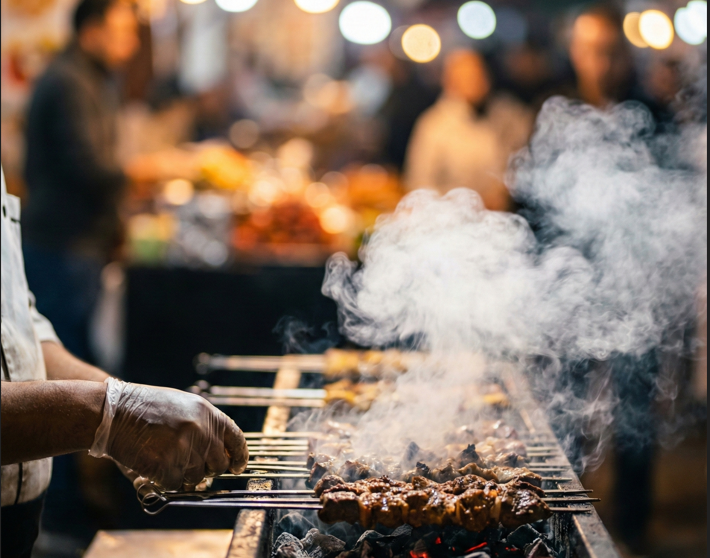
- Brochettes (Kebabs): You select the raw meat from the butcher case, and they grill it over charcoal right in front of you. Safe and delicious.
- Bissara: A thick, boiling hot fava bean soup served with olive oil and cumin. Usually served at breakfast. It is cheap (10 MAD) and sterile due to the boiling.
- Harira: The classic tomato, lentil, and chickpea soup. It simmers in massive pots all day.
- Sfenj: Moroccan donuts dipped in sugar. They come straight out of boiling oil.
3. What to Avoid: The Hidden Dangers
- The Salad Trap: A side of “Salade Marocaine” (diced tomato, onion, cucumber) looks refreshing, but it is raw and washed in tap water. Unless you are in a high-end restaurant, skip it.
- The Juice Carts: In Jamaa el-Fnaa (Marrakech), juice carts are everywhere.
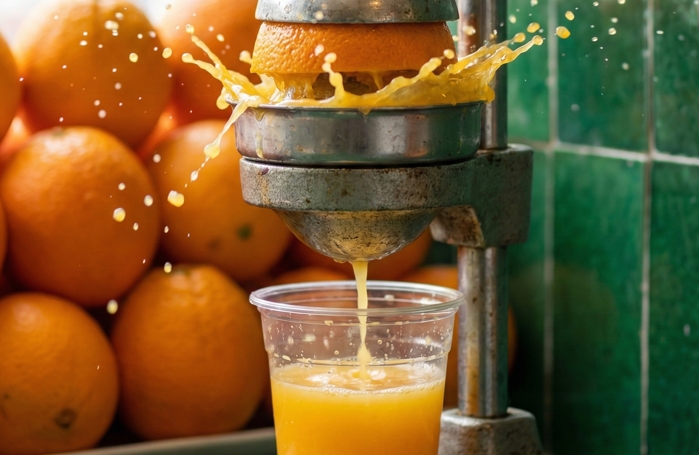
- Safe: “Orange Pressé” (Squeezed in front of you into a plastic cup).
- Risky: “Panaché” (Mixed juice) or anything sitting in a jug.
- The “Snail” Gamble: You will see carts selling bowls of snails (Babbouche). It is a local delicacy, but for a Western stomach unused to local bacteria, it is a high-risk activity. Save this for the last day of your trip.
4. The “Sickness Kit” Strategy
Even with perfect discipline, travel can upset your stomach. Do not wait until you are sick to find a pharmacy.
- Pack from home: Imodium (Loperamide), Activated Charcoal, and Electrolyte powder (e.g., Liquid IV).
- Moroccan Pharmacies: Look for the Green Cross. Moroccan pharmacists are highly trained and can sell many antibiotics over the counter without a prescription if you describe your symptoms.
5. Tech Tool: Translate Before You Eat
Street stalls rarely have English menus. You might think you are ordering chicken and end up with sheep brains (which are tasty, but intense).
- The Fix: Use Google Lens to translate the Arabic/French menus instantly. This requires data.
- Don’t get stuck offline: Ensure you have high-speed data to check stall reviews and translate menus.
Pro Tip: The “Right Hand” Rule
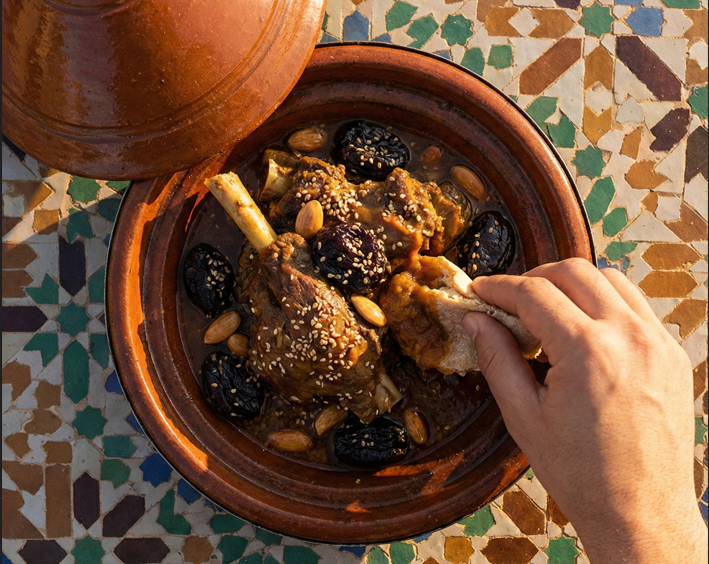
If you are eating Tajine or Msemen with a family or in a traditional setting, you will likely eat with your hands (using bread as a scoop). Always use your right hand. The left hand is traditionally considered “unclean.” Using your left hand to dip into a communal bowl is a major cultural foul.